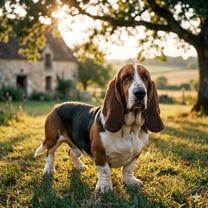
La verdad honesta
Antes de enamorarte, conoce en lo que te estás metiendo.
Los Bassets fueron criados para rastrear huellas de olfato de forma independiente durante kilómetros. Tienen una escucha selectiva e ignorarán las órdenes si no ven valor en ellas. La motivación con comida es esencial para cualquier éxito en el entrenamiento.
Como animales de manada, los Bassets tienen una profunda necesidad de compañía. Cuando se les deja solos, producen un ladrido fuerte y lastimero que penetra las paredes y viaja largas distancias — un serio inconveniente en apartamentos o situaciones con vecinos cercanos.
Notoriamente difíciles de adiestrar en casa — su naturaleza independiente y estructura física convierten esto en una batalla de varios meses (6-12 meses). Los accidentes pueden persistir hasta la edad adulta.
Cuando captan un olor, sus orejas literalmente se doblan hacia adelante para bloquear el sonido, concentrándose completamente en el olor. El llamado de regreso es inexistente — se adentrarán en el tráfico sin una valla segura.
Resumen de salud
Ver guía de salud completa →Costos de propiedad
Ver desglose completo →Incluye comida, seguro, veterinario, aseo y suministros
Situación de vivienda
Con otras mascotas
Clima y cuidado estacional
La baja distancia al suelo significa que el vientre roza la nieve/hielo — riesgo de congelación en los genitales. Se necesitan abrigos para el clima frío. Los paseos de verano solo por la mañana/tarde — el cuerpo pesado se sobrecalienta y la baja distancia al suelo los acerca al pavimento caliente.
Orígenes de la raza
Vivir con un Basset Hound
- Vecinos que se quejan del aullido/ladrido
- Dueños que se rinden en el adiestramiento de casa tras meses de accidentes
- Costos veterinarios inesperados por oídos, ojos y problemas de espalda
- Esperar una personalidad de Golden Retriever en un sabueso obstinado
Menú de ejercicio
30-60 min/dayEtapas de vida
A diferencia de las razas ansiosas por complacer, los cachorros Basset son pesados, obstinados y extremadamente difíciles de adiestrar en casa. La maniobra del 'Basset plano' (tumbarse y negarse a moverse) es frecuente. La paciencia es esencial.
Edad de mayor energía: 1-3 years
Años de esplendor - la energía se estabiliza pero sigue activa
Muchos perros mayores necesitan ayuda para levantarse o subir escaleras. Las rampas se vuelven esenciales. El manejo de la artritis es fundamental. El deterioro cognitivo puede empeorar la ansiedad por separación y el aullido nocturno.
Verificación de realidad del primer año
Viajes y aventura
23-30 kg de 'peso muerto' es difícil de subir a los vehículos — pueden necesitarse rampas para proteger su espalda. El mareo por movimiento es frecuente. Bueno para caminos planos, pero terrible para pendientes pronunciadas o clima caluroso.
Seguridad y contención
La valla física es obligatoria — las vallas invisibles son inútiles; un Basset Hound aceptará la descarga para seguir un olor. Cavan bajo las vallas cuando rastrean. Nunca confiar fuera de la correa.
Información de cría
Habilidades especiales
Guía de entrenamiento
- La comida es el rey — siempre tener golosinas de alta calidad listas
- Mantener las sesiones cortas (5-10 min) para prevenir el aburrimiento
- Nunca usar métodos duros — se cierran por completo
- Aceptar que la obediencia perfecta no está en su ADN
- Escucha selectiva — ignorará órdenes sin motivación con comida
- La resistencia pasiva del 'Basset plano' cuando se aburre
- El adiestramiento en casa puede tardar 6-12 meses
Advertencia de salud: Riesgo de dilatación
Los Basset Hounds son una raza de pecho profundo con ALTO riesgo de Dilatación-Vólvulo Gástrico (DVG/Bloat), una emergencia potencialmente mortal.
Perspectivas de la comunidad
Aún no hay perspectivas sobre Basset Hound
Estamos recopilando datos de propietarios reales de Basset Hound. ¡Sé el primero en compartir tu experiencia!
Registra tu Basset HoundBasset Hounds destacados
¡Sé el primer creator de Basset Hound!
Aún no hay Basset Hounds registrados. Únete a Dogfluence y presenta a tu amigo peludo a las marcas.
Empezar a crearConsejos de cuidado para Basset Hounds
Proporcione 30-60 minutos de ejercicio diario mediante paseos centrados en el olfato para controlar el peso y satisfacer sus instintos de rastreo.
Limpie sus largas y caídas orejas 1-2 veces por semana para prevenir infecciones por hongos y bacterias — esto es absolutamente imprescindible.
Controle la ingesta de alimentos con cuidado ya que los Basset Hounds son propensos a la obesidad; use comederos lentos para prevenir el hinchazón.
Limpie los pliegues faciales y los ojos diariamente para prevenir irritaciones e infecciones.
Nunca permita que salte de los muebles para proteger su larga espalda del IVDD.
Características de la raza
Comparativas de Basset Hound
Más recursos sobre Basset Hound
Costos de Basset Hound
Calcula el verdadero costo de propiedad
Salud del Basset Hound
Problemas de salud comunes y prevención
Aseo del Basset Hound
Cuidado del pelaje y consejos de aseo
Alimentación del Basset Hound
Recomendaciones de nutrición y dieta
Temperamento del Basset Hound
Rasgos de personalidad y comportamiento
Ideas de nombres para Basset Hound
Encuentra el nombre perfecto para tu Basset Hound
Hashtags de Basset Hound
Mejores hashtags de Instagram para publicaciones de Basset Hound
¿No es la raza adecuada?


Preguntas frecuentes
Mezclas populares de Basset Hound

Únete como creator de Basset Hound
¿Amas a tu Basset Hound? ¡Únete a miles de dogfluencers y consigue el patrocinio de las mejores marcas de mascotas!
Registrar mi canal