The Honest Truth
Before you fall in love, know what you're getting into.
Les CEP ont été élevés pour travailler toute la journée sur de petits bateaux de pêche aux côtés de leurs maîtres. Ils vous suivent aux toilettes et peuvent développer une anxiété de séparation sévère s'ils sont seuls plus de 8 heures. Ils ont tendance à aboyer et gémir à la demande s'ils sont ignorés.
En tant que race rapporteuse, ils interagissent avec le monde par leur bouche. Les chiots CEP sont notoirement « mordilleurs » et oraux — ce n'est pas de l'agressivité mais cela peut être douloureux et effrayant pour les jeunes enfants.
Cette race est célèbre pour danser sur ses pattes arrière et sauter pour saluer les visages. Bien que charmant pour certains, c'est un risque de chute significatif pour les propriétaires âgés ou les jeunes enfants.
Le toilettage professionnel toutes les 6-8 semaines à 100-150 $ est obligatoire, pas optionnel. Le négliger entraîne des nœuds graves qui endommagent la peau et nécessitent une tonte complète.
Health Overview
View full health guide →Ownership Costs
View full breakdown →Includes food, insurance, vet visits, grooming, and supplies
Living Situation
With Other Pets
Climate & Seasonal Care
Des boules de neige se forment sur le poil des pattes en hiver - utilisez de la cire musher ou des bottines, ou gardez le poil court. En été, les tontes (coupe Retriever) aident à prévenir la surchauffe. Leurs robes sombres absorbent la chaleur.
Breed Origins
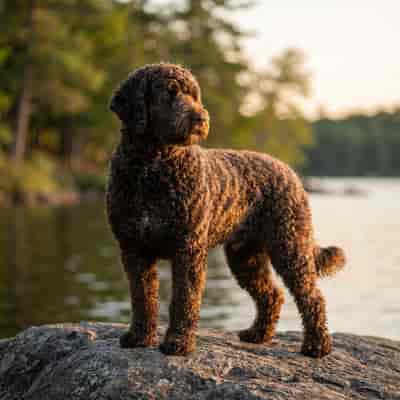
Living With a Chien d'Eau Portugais
- Toilettage et énergie - les propriétaires sous-estiment l'entretien du pelage, ce qui entraîne des nœuds graves
- Les mordillements en période de chiot surprennent et dépassent les propriétaires
- La quantité considérable d'interaction que le chien exige
Exercise Menu
60-90 min/dayLife Stages
Les chiots CEP sont des « requins terrestres » - leur instinct de rapporteur se manifeste par des mordillements et des mâchonnements sévères. Combinés à une haute intelligence et énergie, ils nécessitent plus de gestion qu'un Golden Retriever (6/10) mais moins qu'un Malinois (9/10).
Peak energy age: 1-3 years
Prime years - energy stabilizes but remains active
Ralentissent significativement à partir de 9 ans. Surveillez les yeux qui se troublent (cataractes/APR) et la raideur (arthrite).
First Year Reality Check
Travel & Adventure
Leur pelage non muant les rend bienvenus dans de nombreux hôtels acceptant les animaux. Ils sont aventureux et veulent aller où vous allez. Peuvent aboyer dans les chambres d'hôtel quand ils sont laissés seuls.
Safety & Containment
Faible risque d'évasion mais peut creuser. Si vous avez une piscine, vous DEVEZ leur apprendre comment en sortir avant qu'ils sautent sans surveillance. Les clôtures invisibles sont souvent inefficaces contre leur envie de saluer ou de poursuivre.
Breeding Information
Special Abilities
Training Guide
- Utilisez des friandises et jouets de grande valeur - « Parce que c'est bien payé » fonctionne mieux que « Parce que je l'ai dit »
- Gardez les séances variées et engageantes - ils s'ennuient avec la répétition
- Canalisez les mordillements vers des jeux de rapportage et apprenez-leur à porter des objets
- Haute intelligence mais manipulateurs - ils testeront les limites
- Côté indépendant - ont besoin de savoir POURQUOI ils font quelque chose
- Régression adolescente entre 1-3 ans - peuvent défier l'autorité
Community Insights
No Chien d'Eau Portugais insights yet
We're gathering data from real Chien d'Eau Portugais owners. Be the first to share your experience!
Register your Chien d'Eau PortugaisFeatured Chien d'Eau Portugaiss
Be the first Chien d'Eau Portugais creator!
No Chien d'Eau Portugaiss registered yet. Join Dogfluence and showcase your furry friend to brands.
Start creatingCare Tips for Chien d'Eau Portugaiss
Toilettage Professionnel Obligatoire : Leurs poils poussent en continu et nécessitent un toilettage professionnel toutes les 6-8 semaines (100-150 $). Négliger cela entraîne des nœuds douloureux qui peuvent endommager la peau.
Exercice Quotidien : Prévoyez 60-90 minutes d'activité vigoureuse par jour. La natation est l'exercice idéal — elle les fatigue plus vite que la course et a peu d'impact sur les articulations.
Stimulation Mentale : Un CEP ennuyé est un CEP destructeur. Incluez 20-30 minutes par jour de pistage, de mangeoires puzzle ou d'apprentissage de tours.
Entretien des Oreilles : Les poils poussent à l'intérieur de leurs conduits auditifs et piègent la cire. Nettoyez les oreilles chaque semaine pour prévenir les infections.
Breed Characteristics
Not the Right Fit?



Frequently Asked Questions
Join as a Chien d'Eau Portugais Creator
Love your Chien d'Eau Portugais? Join thousands of dogfluencers and get sponsored by top pet brands!
Enregistrer mon canal