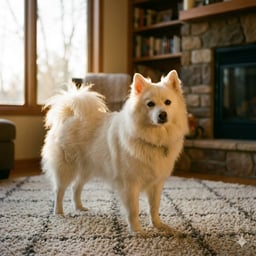
Is a American Eskimo Dog right for you?
Personality traits, family compatibility, and lifestyle match - everything you need to decide.
How much exercise does a American Eskimo Dog need?
40-70 minutes a day: about 50 minutes of physical exercise and 30 minutes of brain work.
- Trick Training15-20 minutes
Challenging trick sequences and freestyle choreography
- Agility20-30 minutes
Obstacle courses and rapid directional changes
- Scent Work15-20 minutes
Barn hunt or scent search games channeling foraging instincts
- Fast CAT / Lure Coursing10-15 minutes
Controlled sprinting pursuing visual lures
Avoid unsupervised yard isolation and off-leash exercise in unfenced areas.
Training a American Eskimo Dog
Method that works: Positive operant conditioning and reward-based trick training. Learns a new command in Top 10-15% command acquisition speed repetitions.
Watch out for
- Nuisance watchdog alarm barking
- Outsmarting inconsistent handlers
- Stranger aloofness/wariness
What works
- Begin anti-barking impulse control early.
- Incorporate trick performance into daily meals.
- Avoid physical corrections which cause shutdown.
Is a American Eskimo Dog right for you?
Engaged owner or active family who enjoys trick training, daily cognitive enrichment, and regular grooming.
Not a good choice as a first dog.
- Inability to tolerate heavy shedding
- Unwillingness to manage alert barking
- Leaving the dog alone 10+ hours daily
The first year
Crate training is essential to prevent destructive investigative chewing when mentally bored.
Typical American Eskimo Dog behaviour
- Eskie Smile
- Submissive grimace retracting the upper lips and squinting eyes to express delight.
- Snow Plowing
- Shoving snout and chest into fresh winter snow while running in circles.
- Feline Perching
- Perching on high surfaces, back of couches, and window sills to monitor surroundings.
- Hind-Leg Walking
- Spontaneously standing and walking steps on hind legs to solicit food or trick play.