How to groom a Bichon Frise
Complete step-by-step grooming guide for curly coat care
Bichon Frise coat and grooming at a glance
- Coat
- Curly coat
- Shedding
- Low
- Seasonal shedding
- None
- Ear cleaning
- Weekly
- Nail growth
- Fast
- Eye care
- High
Brushing and bathing a Bichon Frise
- Normally
- Daily (or minimum 4-5 times weekly)
- During shedding
- Daily (continuous non-seasonal maintenance; juvenile coat blowout at 9-12 months requires twice-daily line brushing)
- Shedding months
- Continuous minimal shedding (no seasonal coat blow; shed hair is captured within the dense curly undercoat)
- Per session
- 20-30 minutes for standard pet clip; 45-60 minutes for full exhibition coat
- Bathing
- Every 2 to 3 weeks using a gentle, hypoallergenic whitening or moisturizing shampoo followed by a protein-rich conditioner. Do not bathe more frequently than every 10-14 days to prevent stripping dermal lipids, which triggers secondary sebaceous dryness and pruritus. Never air-dry; wet coats must be high-velocity blow-dried while being brushed straight ('fluff-drying').
- Professional grooming
- Complete professional hygiene trim, sanitary clearing, ear canal hair pluck/clean, ultrasonic or manual tooth check, and hand-scissoring into the signature rounded powder-puff head and cylindrical leg styling. · Every 4 to 6 weeks
Step by step
- 11. Pre-Bath Detangle & Line Brushing
Partition the hair in layers using one hand, then brush small sections upward from the skin surface out with the slicker brush. Follow every stroke with the metal greyhound comb until zero resistance is encountered.
- 22. Bathing & Cleansing
Saturate coat thoroughly with warm water. Apply diluted moisturizing shampoo, massaging gently in the direction of hair growth (never rub in circles, which creates mats). Clean eye contours with specialized facial wash. Rinse completely for at least 5 minutes.
- 33. High-Velocity Fluff-Drying
Towel blot without rubbing. Use high-velocity dryer on warm/cool setting while continuously brushing small sections with the slicker brush to stretch and straighten the corkscrew curls into a cloud-like texture.
- 44. Hand-Scissoring & Finishing
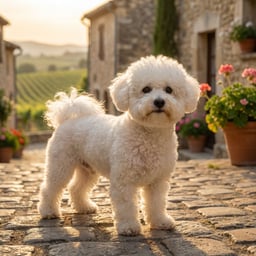
Comb coat up and out. Scissor legs into straight, plush parallel pillars. Trim feet into neat round pads. Sculpt the head and muzzle into the iconic seamless sphere, emphasizing the dark round eyes with pronounced 'halos'.
Tools for this coat
- Long-Pin Slicker Brush (e.g., Chris Christensen Big G or Baby G)
Essential for penetrating deep through the dense curly outer coat down to the dermis without scratching the delicate skin, lifting shed undercoat hairs.
- Steel Greyhound Comb (Fine/Coarse dual-spaced)
The ultimate verification tool; must glide freely from the skin surface through the coat tips to ensure no hidden micro-mats linger at the follicle level.
- High-Velocity Variable-Speed Blow Dryer
Blasts moisture out from the skin, straightens the curly shaft for fluff-drying, and separates coat fibers for precision scissoring.
- Curved and Straight Professional Grooming Shears (7 to 8 inch)
Required for hand-scissoring the spherical head, bell-shaped ear blend, and balanced body outline.
Never do this with a Bichon Frise
- NEVER bathe a Bichon Frise that has existing mats or tangles; water acts as a felting agent, shrinking mats into solid, painful felted pelts that can only be removed via surgical clippers
- NEVER use electric clippers with a close blade on the skin; the fine, pale epidermis is prone to clipper burn and secondary pyoderma
- NEVER let the coat air-dry naturally; failing to stretch the curls with a blow dryer and slicker brush results in dense, impenetrable dreadlocks at the skin base
- NEVER leave tear-stained facial furnishings wet; dampness promotes Malassezia yeast proliferation
Ears, eyes, teeth and nails
Ears: Prone to excessive internal hair growth within the external auditory canal that traps wax and moisture; requires gentle routine plucking and drying ear cleanser. Eyes: Wipe discharge twice daily with sterile saline to prevent porphyrin tear staining; ensure facial scissoring keeps stray hairs out of cornea. Teeth: Daily enzyme brushing non-negotiable due to severe overcrowding; annual scaling mandatory. Nails: Clip or grind weekly; quicks grow fast in small breeds.
Through the seasons
Snow forms painful ice balls in curly coat and paw pads; pet-safe paw wax or booties recommended. Full coats in hot, humid weather increase heat stress.
Paw protection helps in snow and on hot pavement.
Coat colours
From 28 owner profiles
How often owners brush and trim their Bichon Frise
- Monthly56%All dogs: 34%
- Daily22%All dogs: 13%
- Weekly15%All dogs: 27%
- Every two weeks7%All dogs: 16%
- Rarely0%All dogs: 11%

- Monthly56%All dogs: 26%
- When needed33%All dogs: 50%
- Every two weeks7%All dogs: 16%
- Weekly4%All dogs: 8%
Do you have a Bichon Frise? Tell us how it goes with your dog
Add your dog and your answers help other owners of this breed.