Boxer vs Miniature Pinscher
A side-by-side comparison to help you find the right breed for your lifestyle.
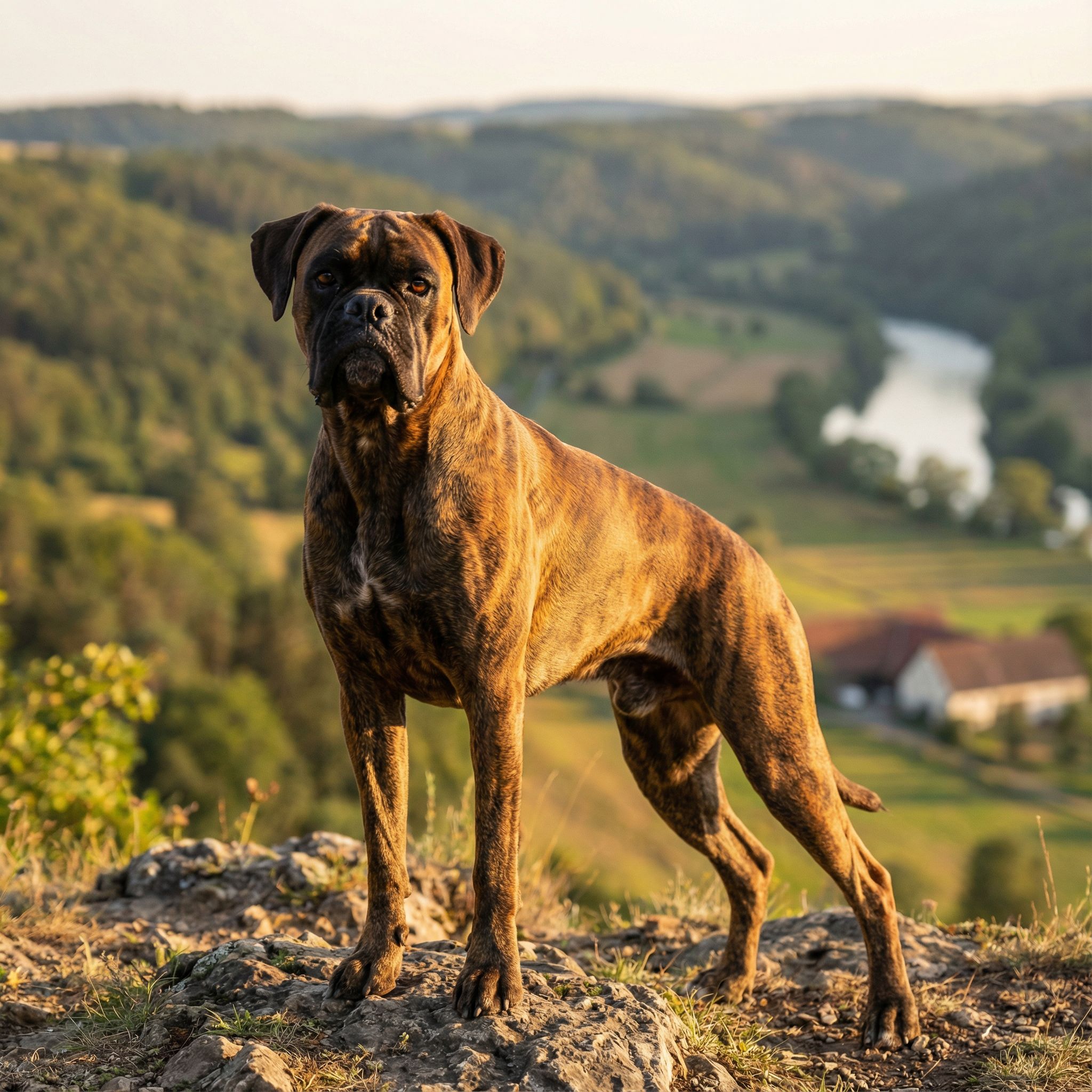
Boxer
Also known as: German Boxer, Deutscher Boxer
The Boxer is a loyal, energetic, and affectionate breed developed in Germany from the Bullenbeisser ('Bull Biter'). Often called 'the heartbreak breed' due to their shorter lifespan and health challenges, Boxers are legendary for their patience with children and their clownish personality. They are hardwired to be close-contact dogs and do not tolerate isolation well.
Large
High
10-12 yrs
57-63 (male), 53-59 (female) cm
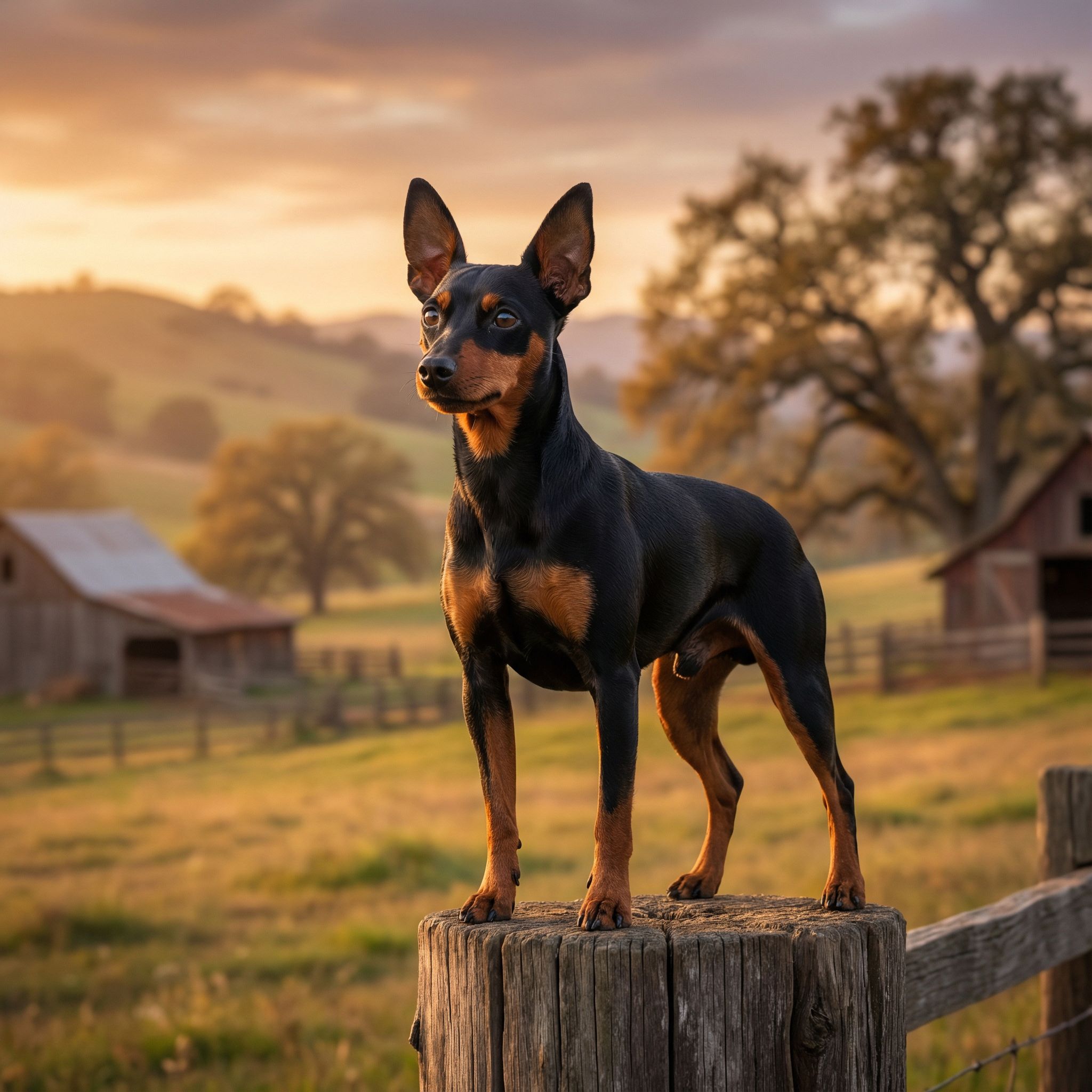
Miniature Pinscher
Also known as: Min Pin, King of Toys, Zwergpinscher, Reh Pinscher
The Miniature Pinscher is a small, energetic breed known for its spirited personality and elegant appearance, often characterized by its sleek, shiny coat and distinctive high-stepping gait. Often referred to as the 'King of Toys,' this breed is confident and curious, making it a lively and affectionate companion.
Extra Small
High
12-16 yrs
25-32 cm
Quick Comparison
| Trait | Boxer | Miniature Pinscher |
|---|---|---|
| Energy | ||
| Trainability | ||
| Grooming Needs | ||
| Family Friendly | ||
| Independence |
Key Characteristics
| Good with Kids | ||
| Good with Dogs | ||
| Good with Cats | ||
| Hypoallergenic | ||
| Apartment Friendly | ||
| First-Time Owner OK |
| Detail | Boxer | Miniature Pinscher |
|---|---|---|
| Size | Large | Extra Small |
| Energy Level | High | High |
| Grooming | Low | Low |
| Trainability | Moderate | challenging |
| Barking Level | Low | High |
| Shedding Level | Medium | Low |
| Chew strength | Hard | Light |
| Housing | Yard | Apartment |
Owner Fit & Decision Guide
Owner Match
| Trait | Boxer | Miniature Pinscher |
|---|---|---|
| Experience Level | Beginner to Intermediate | Intermediate |
| First-Time Owner | ||
| Ideal Owner | Active individual or family who works from home or can provide midday breaks. Tolerant of drool, flatulence, and constant companionship. Financially prepared for cardiac monitoring and potential cancer treatment. Not bothered by a dog who needs to be physically close at all times. | Experienced dog owner who understands canine body language, leadership, and training mechanics. Active individual with time for daily exercise and mental stimulation. Patient with house training challenges. |
Boxer Dealbreakers
- Work long hours away from home
- Cannot afford $100+/month pet insurance
- House proud and hate drool/hair/gas
- Want a dog that ignores strangers
- Live in hot climate without AC
Miniature Pinscher Dealbreakers
- Living in apartment with strict noise policies
- Having toddlers in the home
- Wanting a passive couch companion
- Unable to provide consistent leadership and training
Surrender Risk
| Factor | Boxer | Miniature Pinscher |
|---|---|---|
| Risk Level | Medium | Medium |
| Primary Reasons | Too much energy / destructive when left alone, Housing bans - insurance lists often include Boxers, Medical costs from cancer or heart conditions | Small Dog Syndrome - owners tolerate behaviors that create a neurotic, tyrannical dog, Barking leads to eviction threats or neighbor complaints, Dog becomes fearful/aggressive from lack of socialization, Bites a child or guest due to defensive behavior |
Temperament & Personality
Behavior Comparison
| Trait | Boxer | Miniature Pinscher |
|---|---|---|
| Prey Drive | ||
| Watchdog Ability | ||
| Stranger Friendly | ||
| Drool Level | ||
| Wanderlust |
Vocalization
| Trait | Boxer | Miniature Pinscher |
|---|---|---|
| Barking Level | Low | High |
| Howling Tendency | ||
| Whining Tendency | Medium | Medium |
| Separation Vocalization |
Safety & Reliability
| Trait | Boxer | Miniature Pinscher |
|---|---|---|
| Escape Artist | ||
| Dog Park Suitable | ||
| Off-Leash Reliable | ||
| Small Animal Safe | ||
| Leash Reactivity | ||
| Resource Guarding Risk | Low | Moderate |
Boxer Social Traits
Low
Same-sex aggression common in females at 18-24 months
Miniature Pinscher Social Traits
High
Same-sex aggression common (onset 18-24 months). Safer to keep male-female pair than two of same sex.
Training
Boxer
- Keep sessions short (5-10 minutes) and fun
- High food and toy drive - use both for motivation
- Teach 'place' command to develop an 'off switch'
- They want to please but also want to have fun
Miniature Pinscher
- They obey if there's something in it for them - use high-value treats
- Avoid harsh corrections - they become defensive or shut down
- Socialize aggressively early (100 new people in 100 days)
- Teach 'Place' command to help them learn to settle
Boxer Considerations
This is the single most common behavioral reason for Boxer surrenders. They are genetically wired to be close-contact working dogs and do not tolerate isolation. Left alone 8+ hours, they frequently develop self-injury, destruction, and incessant vocalization.
A Boxer will follow you to the bathroom, sit on your feet while you cook, and attempt to sleep on your head. For owners seeking an independent dog, this intensity can be overwhelming.
Boxers—particularly females—can develop intolerance toward other dogs of the same sex once they reach social maturity (18-24 months). This is often not trainable but requires lifelong management.
Boxers have shorter airways making them highly susceptible to heat stroke. They cannot cool themselves efficiently in temperatures over 25°C (77°F). Vigorous exercise in heat is dangerous.
Miniature Pinscher Considerations
Min Pins take their watchdog role seriously. A leaf blowing or neighbor closing a car door triggers piercing alarm barking. In apartments with thin walls, this leads to neighbor complaints and eviction notices.
They squeeze through small fence gaps, climb chain-link, and bolt through open doors with lightning speed. Their high prey drive means once out, they won't recall - they'll chase a squirrel across traffic without hesitation.
Min Pins possess territoriality and assertiveness rivaling giant guardian breeds. They challenge dogs ten times their size and won't back down, making them poor candidates for dog parks or off-leash environments.
Like many toy breeds, they have small bladders and low tolerance for cold or wet weather. If it's raining, a Min Pin may refuse to go outside and will find a hidden spot indoors instead.
Multi-Species Compatibility
| Species | Boxer | Miniature Pinscher |
|---|---|---|
| With Cats | Moderate risk - prey drive often 'arrested' at chase phase, less likely to kill than terriers, but play style (boxing, slamming) can accidentally injure | May coexist if raised together from puppyhood, but running cats trigger chase response |
| Small Mammals | Moderate risk - high prey drive for moving objects, supervision required | Dangerous - hamsters, gerbils, rabbits are natural prey |
| Birds / Reptiles | Moderate risk - curious and may paw at cages, stressing small animals | Dangerous - will fixate on cages for hours, quick enough to snatch birds from air |
Advanced Behavior
| Trait | Boxer | Miniature Pinscher |
|---|---|---|
| Predatory Sequence Risk | Arrested | Full |
| Biddability | Medium | Low |
| Noise Sensitivity | Low | Low |
| Territorial Barking | ||
| Same-Sex Aggression Onset | 18 months | 18 months |
Boxer: Predatory sequence is typically Eye -> Stalk -> Chase -> Grab (Kill inhibited). They are not 'robots' like German Shepherds - get bored with drilling same command. Keep training sessions short (5-10 min) and fun. Harsh methods cause them to shut down or become 'clownish'.
Miniature Pinscher: Full predatory sequence: Eye -> Stalk -> Chase -> Grab-Bite -> Kill-Bite. Bred to kill vermin, this is hardwired and cannot be trained out. Smart enough to open latches and find hidden food, but may refuse repetitive obedience without high-value motivation.
First Year & Life Stages
First Year Challenges
| Challenge | Boxer | Miniature Pinscher |
|---|---|---|
| Puppy Difficulty | ||
| Destructive Phase | 0-24 | 6-18 |
| House Training | Medium | Hard |
| Crate Training | High | High |
| Adolescent Regression |
Boxer: Boxer puppies are rowdy - they jump, mouth, and 'box' with their paws. Physically strong at young age - a 6-month-old can easily knock over a toddler. Destructive phase lasts longer than average, often until 2 years. Crate training is non-negotiable.
Miniature Pinscher: Combines fragility of a toy puppy with intensity of a working terrier. House training is a 6-12 month battle. Crate training is non-negotiable for safety of dog and home.
Life Stages Timeline
| Stage | Boxer | Miniature Pinscher |
|---|---|---|
| Puppy Phase | 18 months | 10 months |
| Adolescence | 18-36 | 10-18 |
| Adult Years | 3-7 | 2-9 |
| Senior Onset | ~8 years | ~10 years |
| Peak Energy Age | 1-3 years | 1-3 years |
Size & Physical Characteristics
Physical Stats
| Measurement | Boxer | Miniature Pinscher |
|---|---|---|
| Height | 57-63 (male), 53-59 (female) cm | 25-32 cm |
| Weight | Not enough data yet | Not enough data yet |
| Size Category | Large | Extra Small |
| Lifespan | 10–12 years | 12–16 years |
| Litter Size | 6-8 | 2-6 |
Boxer Coat
Miniature Pinscher Coat
Lineage & Origin
| Detail | Boxer | Miniature Pinscher |
|---|---|---|
| Original Purpose | Bull-baiting dog - seizing and holding bear, boar, and deer until hunter arrived | Barnyard ratter - hunting and killing vermin in stables and homes |
| Origin | Germany, late 19th century | Germany, 17th-18th century (predates the Doberman by 200 years) |
Breeding Details
| Detail | Boxer | Miniature Pinscher |
|---|---|---|
| C-Section Rate | 20-30% | Moderate |
| Whelping Difficulty | Medium | Medium |
| Puppy Mortality Rate | Medium | Low |
Physical Risks
| Risk | Boxer | Miniature Pinscher |
|---|---|---|
| Bloat / GDV Risk | High | Low |
| Slippery Floor Risk | Low | Low |
| Min Fence Height | 1.8m | 1.2m |
| Dig / Escape Risk | Low | High |
Health & Common Conditions
Boxer Health Issues
Miniature Pinscher Health Issues
Boxer Suggested Tests
- Annual Holter Monitor (24-hour ECG) starting at age 3
- Annual Echocardiogram starting at age 3
- ARVC1 (Striatin) genetic testing
- DM (Degenerative Myelopathy) genetic testing
- Doppler echocardiogram for Aortic Stenosis
- Monthly lump checks for mast cell tumors
Miniature Pinscher Suggested Tests
- MPS VI genetic test
- OFA Patella evaluation
- OFA Hip evaluation
- Eye exam (CERF/OFA)
- Thyroid panel
Health Risk Overview
| Risk Factor | Boxer | Miniature Pinscher |
|---|---|---|
| Cancer Risk | High | Low |
| Cardiac Risk | High | Low |
| Neurological Risk | Medium | Low |
| CCL/ACL Tear Risk | Medium | Low |
| Vet Burden Tier | High | Medium |
Sensitivities & Allergies
| Sensitivity | Boxer | Miniature Pinscher |
|---|---|---|
| Skin Allergies | ||
| Environmental Allergies | ||
| Stomach Sensitivity | High | Low |
| Food Allergies | Grain sensitivities, Chicken |
Health Maintenance
| Care Item | Boxer | Miniature Pinscher |
|---|---|---|
| Nail Growth Rate | Normal | Fast |
| Eye Care Needs | Low | Low |
| Anal Gland Issues | Occasional | Rare |
Senior Care & Aging
Boxer Senior Care
Common Senior Issues
- Boxer Cardiomyopathy (ARVC)
- Cancer (mast cell tumors, lymphoma)
- Arthritis/mobility issues
- Degenerative Myelopathy (DM)
- Cognitive decline
Rapid decline often occurs at 8+ years due to cancer or heart issues. End-of-life decisions often complicated by sudden cardiac events or cancer diagnoses. May need ramps for mobility.
Miniature Pinscher Senior Care
Common Senior Issues
- Dental issues and tooth loss
- Heart murmurs
- Arthritis
- Vision deterioration
Slowing down by age 10+, seeking more warmth. Dental issues and heart murmurs commonly appear in senior years.
Grooming & Care
Boxer
low maintenanceMiniature Pinscher
low maintenanceLifestyle Compatibility
Boxer Daily Life
Miniature Pinscher Daily Life
Housing & Legal Restrictions
| Restriction | Boxer | Miniature Pinscher |
|---|---|---|
| BSL Restricted | ||
| Common Rental Ban | ||
| Insurance Blacklist | ||
| Weight Category | Over 50lbs | Under 25lbs |
Climate Tolerance
| Climate | Boxer | Miniature Pinscher |
|---|---|---|
| Heat Tolerance | ||
| Cold Tolerance | ||
| Water Affinity | Medium | Low |
Travel Compatibility
| Activity | Boxer | Miniature Pinscher |
|---|---|---|
| Car Travel | Excellent | Good |
| Camping | ||
| Beach Friendly | ||
| Hiking Rating | ||
| Cabin Flight Eligible | ||
| Hotel Friendly Size |
Niche Suitability
| Role | Boxer | Miniature Pinscher |
|---|---|---|
| Service Dog | Medium | Low |
| Therapy Dog | High | Low |
| Deep Pressure Therapy | ||
| Canicross / Bikejoring | ||
| Apartment Adaptable | ||
| Tactile / Sensory Friendly | ||
| Livestock Guardian | ||
| Medical Alert | Low | Low |
Costs & Expenses
Upfront Costs
| Cost | Boxer | Miniature Pinscher |
|---|---|---|
| Purchase Price | $1,500-3,000 | $1,000-2,500 |
| Initial Cost Range | $1,500–$3,000 | $1,000–$2,500 |
| Cost Tier |
Ongoing Costs
| Cost | Boxer | Miniature Pinscher |
|---|---|---|
| Monthly Range | $180–$300 | $100–$180 |
| Yearly Range | $2,500–$4,000 | $1,200–$2,160 |
| Food / Month | $70-100 | $30-50 |
| Insurance / Month | $80-150 | $35-85 |
| Grooming / Session | $30-50 | $25-50 |
| Vet Routine / Year | $800-1,500 | $200-400 |
| Monthly Cost Tier |
Boxer Lifetime Cost
$25,000-55,000
Miniature Pinscher Lifetime Cost
$15,000-30,000
Quirks & Fun Facts
Daily Quirks
| Quirk | Boxer | Miniature Pinscher |
|---|---|---|
| Snoring | ||
| Flatulence | Frequent | Rare |
| Slobber Level | Moderate | None |
| Smell When Wet | Strong | Mild |
| Zoomies Frequency | Daily | Daily |
| Counter Surfing | ||
| Digging Tendency | Low | Medium |
Boxer Quirks
The Boxer Lean
They will lean their entire body weight against you as a sign of affection
The Kidney Bean Dance
Twisting their bodies in excitement when greeting people they like
Boxing
Using their front paws to 'box' during play - their namesake behavior
Chewbacca Noises
Snorting, snoring, and making unique vocalizations when excited
The Gas
Boxers are notorious for flatulence - high-quality diet helps but won't eliminate it
Miniature Pinscher Quirks
The Min Pin Strut
A unique, high-stepping 'hackney gait' resembling a prancing horse
Burrowing Expert
Will disappear into blankets, laundry piles, or made beds - always check before sitting
The 'Grin'
May bare teeth in a 'submissive grin' when excited - looks like aggression but is actually appeasement
Frequently Asked Questions
Turn your dog into a brand deal.
Pet brands are looking for authentic creators — not celebrities. If you own a Boxer or Miniature Pinscher, you can get free products, gear, and exclusive perks just for sharing your dog's life on Instagram.
No followers minimum · Free to join
Compare with Other Breeds
Compare Boxer with:
Compare Miniature Pinscher with:
Based on comprehensive breed research data.