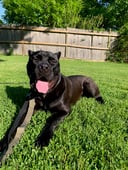
Cane Corso feeding guide
Complete nutrition guide with personalized feeding calculator, portion recommendations, and diet advice.
How much should a Cane Corso eat?
Breed research puts an adult Cane Corso at 2,100 to 2,900 kcal a day.
Intact or active adult working dog vs. neutered pet at moderate activity level (~45-50 kg)
Meals per day: puppy 3-4 meals until 6 months, then 3 meals until 12 months · adult Strictly 2 divided meals (never feed once daily due to bloat risk)
For your own dog
At 47 kg your dog needs about 2,010 to 2,513 kcal: roughly 560 to 700 g of dry food.
Starting weight: the breed's average adult weight.
Calculated from resting energy (70 x weight^0.75) times an activity factor, and dry food at about 360 kcal per 100 g. Check the label of your food and adjust to your dog's body condition.
Per life stage
Spread over 3 to 4 meals.
Puppy food until about 6 months.
Adult phase: 2 to 7 years.
From about 6.5 years: fewer calories, same protein.
Puppy amounts assume about half the adult weight before 4 months and about 80% after.
Feeding a Cane Corso puppy
Must be fed an authentic Large/Giant Breed Puppy formula with strictly controlled calcium (0.8-1.2% dry matter) and phosphorus (0.7-1.0%) and moderate fat (12-15%) until at least 18-24 months. Rapid growth spurts must be avoided at all costs to prevent developmental orthopedic diseases (hypertrophic osteodystrophy, osteochondritis dissecans, and hip dysplasia exacerbation). Maintain a lean body condition score of 4/9 throughout skeletal growth.
Keeping a Cane Corso at a healthy weight
Extremely sensitive to caloric excess. Every additional 2 kg of excess adipose tissue dramatically increases joint pain and accelerates cartilage destruction on dysplastic hips and elbows. Ribs should be easily palpable beneath a light fat cover, with a visible abdominal tuck and distinct waistline when viewed from above.
Mandatory bloat prevention protocol: absolutely no vigorous physical exercise, running, or high excitement for 60 minutes before and 90 minutes after eating. Feed from ground-level or slightly stabilized slow-feeder bowls (elevated bowls remain controversial; recent veterinary epidemiological data suggests elevated feeders may increase GDV risk in large breeds). Prophylactic gastropexy strongly recommended during spay/neuter.
Known food sensitivities: Chicken and poultry protein allergy (manifests as pododermatitis, recurrent otitis externa, and skin erythema), High sensitivity to soy and corn grain fillers causing loose stools and flatulence
Always provide clean, fresh water in heavy non-tip bowls, but avoid allowing the dog to gorge on gallons of water immediately after strenuous exercise.
What to watch with a Cane Corso
- Cane Corsos put on weight easily. Weigh food instead of scooping, and count training treats.
- Bloat (GDV) risk is high: give smaller meals and no hard exercise right after eating.
- Sensitive stomach: change food gradually over a week.
- Prone to skin allergies, which are often food-related.
- Very food-motivated: easy to train with food, easy to overfeed.
What Cane Corso owners on Dogfluence feed




 11 Cane Corso owners told us
- Dry kibble55%
- Raw diet36%
- Homemade meals9%