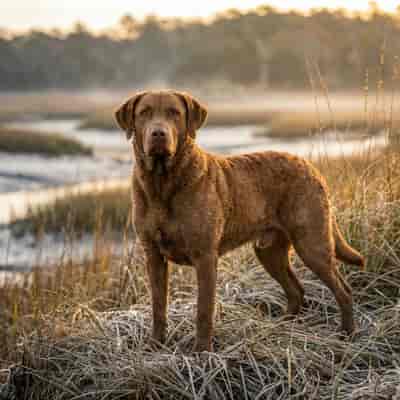

The Honest Truth
Before you fall in love, know what you're getting into.
Contrairement au Golden Retriever qui considère tout le monde comme un ami, le Chessie se méfie naturellement des inconnus et protège sa famille et son territoire. Sans une socialisation précoce intensive, cela peut dégénérer en agressivité par la peur ou en problèmes avec les visiteurs et les livreurs.
Élevé pour prendre des décisions indépendantes lors du rapport en eaux glaciales et dangereuses, les Chessies n'obéissent pas aveuglément aux ordres. Ils défieront les maîtres qui manquent de constance ou de confiance. Ils sont souvent décrits comme des 'négociateurs' plutôt que des 'chercheurs à plaire'.
Il n'est pas rare que les Chessies, en particulier les mâles, développent une intolérance envers les chiens du même sexe lorsqu'ils atteignent la maturité sociale (18–24 mois). Cela peut rendre difficile la gestion dans les foyers avec plusieurs chiens.
Leur forte pulsion et leur nature possessive peuvent se manifester par la garde de nourriture, de jouets ou même de personnes. Cela nécessite une intervention précoce et des protocoles de gestion.
Health Overview
View full health guide →Ownership Costs
View full breakdown →Includes food, insurance, vet visits, grooming, and supplies
Living Situation
With Other Pets
Climate & Seasonal Care
Adapter les activités en fonction des conditions météorologiques.
Breed Origins
Living With a Chesapeake Bay Retriever
- Underestimated exercise needs
- Behavioral challenges
- Cost of care
Exercise Menu
60-90 min/dayLife Stages
Les chiots Chesapeake Bay Retriever requièrent un entraînement cohérent et de la patience.
Peak energy age: 1-3 years
Prime years - energy stabilizes but remains active
Les soins aux seniors varient selon la santé individuelle.
First Year Reality Check
Travel & Adventure
S'adapte bien aux voyages avec une préparation adéquate.
Safety & Containment
Un enclos adéquat et une surveillance sont recommandés.
Breeding Information
Special Abilities
Training Guide
- Les Chessies ne répondent pas bien à un dressage dur et répétitif. Ils requièrent une approche de 'leader bienveillant' — ferme, juste et cohérent.
- Si vous donnez un centimètre à un Chessie, il en prendra un kilomètre. L'incohérence dans les règles sera immédiatement exploitée.
Community Insights
No Chesapeake Bay Retriever insights yet
We're gathering data from real Chesapeake Bay Retriever owners. Be the first to share your experience!
Register your Chesapeake Bay RetrieverFeatured Chesapeake Bay Retrievers
Be the first Chesapeake Bay Retriever creator!
No Chesapeake Bay Retrievers registered yet. Join Dogfluence and showcase your furry friend to brands.
Start creatingCare Tips for Chesapeake Bay Retrievers
Assurez-vous que votre Chesapeake Bay Retriever bénéficie d'un exercice régulier.
Fournissez une alimentation équilibrée adaptée à leur taille et à leur niveau d'énergie.
Le toilettage régulier et les visites vétérinaires sont essentiels.
Breed Characteristics
More Chesapeake Bay Retriever Resources
Chesapeake Bay Retriever Costs
Calculate the true cost of ownership
Chesapeake Bay Retriever Health
Common health issues & prevention
Chesapeake Bay Retriever Grooming
Coat care & grooming tips
Chesapeake Bay Retriever Food
Nutrition & diet recommendations
Chesapeake Bay Retriever Temperament
Personality & behavior traits
Chesapeake Bay Retriever Name Ideas
Find the perfect name for your Chesapeake Bay Retriever
Chesapeake Bay Retriever Hashtags
Top Instagram hashtags for Chesapeake Bay Retriever posts
Not the Right Fit?

Frequently Asked Questions
Join as a Chesapeake Bay Retriever Creator
Love your Chesapeake Bay Retriever? Join thousands of dogfluencers and get sponsored by top pet brands!
Enregistrer mon canal