
Dalmatian feeding guide
Complete nutrition guide with personalized feeding calculator, portion recommendations, and diet advice.
How much should a Dalmatian eat?
Breed research puts an adult Dalmatian at 1,250 to 1,850 kcal a day.
Moderate to high athletic activity (1-2 hours daily trotting/running)
Meals per day: puppy 3-4 · adult 2
For your own dog
At 25 kg your dog needs about 1,252 to 1,565 kcal: roughly 350 to 435 g of dry food.
Starting weight: the breed's average adult weight.
Calculated from resting energy (70 x weight^0.75) times an activity factor, and dry food at about 360 kcal per 100 g. Check the label of your food and adjust to your dog's body condition.
Per life stage
Spread over 3 to 4 meals.
Puppy food until about 6 months.
Adult phase: 2 to 8 years.
From about 8 years: fewer calories, same protein.
Puppy amounts assume about half the adult weight before 4 months and about 80% after.
Feeding a Dalmatian puppy
Feed a controlled-growth, large-breed puppy formula or specialized purine-conscious growth diet until 12-14 months of age. Avoid oversupplementing calcium or protein; maintain lean body condition (BCS 4.5/9) to protect developing joints.
Keeping a Dalmatian at a healthy weight
Dalmatians have a moderate metabolism and lean, muscular build. Extra weight severely increases hip strain and urinary stagnation. Keep ribs easily felt under skin; if the waistline blurs, reduce intake immediately.
Deep-chested build presents moderate GDV risk; avoid vigorous running 1 hour before and 2 hours after meals; feed from floor level; discourage air gulping.
Known food sensitivities: High-purine proteins: beef liver, kidneys, heart, organ meats, venison, game meats, lamb, High-purine seafood: sardines, anchovies, mackerel, herring, scallops, mussels, Brewer's yeast, nutritional yeast, and yeast extracts (common in commercial pet treats), High-purine legumes: excessive lentils, peas, and soy concentrates
MANDATORY FOR HUA DALMATIANS: Diet must emphasize low-purine, high-quality proteins such as eggs, dairy (cottage cheese, whey), poultry (chicken/turkey in moderation), and low-purine white fish (cod, haddock). Every dry meal MUST be 'floated' in ample water to flush the urinary bladder continuously. Frequent bathroom breaks (every 3-4 hours during the day) are essential to prevent crystal precipitation in stagnant urine.
What to watch with a Dalmatian
- Bloat (GDV) risk is medium: give smaller meals and no hard exercise right after eating.
- Sensitive stomach: change food gradually over a week.
- Prone to skin allergies, which are often food-related.
- Very food-motivated: easy to train with food, easy to overfeed.
What Dalmatian owners on Dogfluence feed
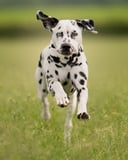






 17 Dalmatian owners told us
- Dry kibble53%
- Wet food18%
- Homemade meals18%
- Raw diet12%