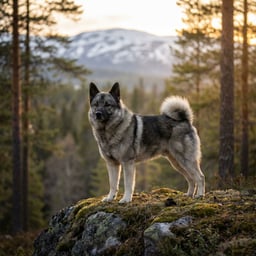
Is a Norwegian Elkhound right for you?
Personality traits, family compatibility, and lifestyle match - everything you need to decide.
Is a Norwegian Elkhound right for you?
Take our 1-minute compatibility quiz based on this breed's traits
Know Before You Commit
Important behavioral traits that potential owners should understand:
This breed was genetically engineered to bark. In their native Norway, their job is to track moose (elk) and hold them at bay by barking rhythmically and continuously until the hunter arrives. This is not a trait that can be "trained out" completely. They will bark at squirrels, cars, delivery drivers, and leaves blowing in the wind. If you live in a noise-restricted community or share walls with neighbors, this breed is a.
Unlike a Golden Retriever that asks, "What can I do for you?", the Elkhound asks, "What's in it for me?" They are independent problem solvers. This manifests as "stubbornness" during training. They will often weigh the value of a treat against the interest of a scent and choose the scent.
These dogs are trackers. If they catch a scent, their ears turn off, and they will follow it for miles. They cannot be trusted off-leash in unfenced areas. Their recall is notoriously unreliable when prey drive is activated.
Family Compatibility
How Norwegian Elkhounds typically get along with different family members and pets:
Children (0-5 years)
Norwegian Elkhounds are typically patient and gentle with young children - always supervise interactions
Tip: Teach children to be gentle and never disturb the dog while eating or sleeping
Children (5-12 years)
Excellent playmates! Norwegian Elkhounds often bond strongly with school-age children
Tip: A great age to involve kids in feeding, grooming and training
Teenagers
Norwegian Elkhounds typically do well with teenagers who can help with exercise and care
Tip: Teens can take on walking and training responsibilities
Other dogs
Most Norwegian Elkhounds can live happily with other dogs when properly introduced
Tip: Gradual introductions on neutral territory work best
Cats
High-energy dogs often like to chase, which can make living with cats harder
Tip: Early socialization with cats increases success
Small pets (rabbits, hamsters)
Caution advised - most dogs have some prey instinct toward small animals
Tip: Always keep small pets securely housed when the dog is around
Living Situation Compatibility
Apartment
Norwegian Elkhounds may find apartment living challenging
- Daily walks are essential
- Generally quiet indoors
- Mental stimulation is important
House with yard
An ideal setup for most Norwegian Elkhounds - space to play and explore
- Secure fencing required
- Supervised outdoor time recommended
- Still needs walks for enrichment
Rural/farm
Norwegian Elkhounds thrive with lots of space to run
- Good recall training is essential
- Watch out for wildlife
- Plenty of room to exercise
First-time owner
Norwegian Elkhounds may be better suited to experienced owners
- Consider professional training
- Research the breed thoroughly
- Be prepared for challenges
Work from home
Norwegian Elkhounds love having their people around all day
- Set boundaries for work time
- Schedule regular play breaks
- Create a comfortable space for them
Away 8+ hours
Norwegian Elkhounds may struggle with long alone time - prone to boredom and anxiety
- Dog walker or daycare strongly recommended
- Puzzle toys are essential
- Consider a companion pet
Training Your Norwegian Elkhound
Independent thinker
Intelligent but may have their own agenda - not ideal for novice owners
Training Tips
- Set clear, consistent rules early
- Make training fun and rewarding
- Consider professional help
- Be very patient and consistent
Common Challenges
- May ignore commands if uninterested
- Needs an experienced handler
- Needs clear boundaries
Pro tip: Consider professional training classes, especially for first-time Norwegian Elkhound owners. Group classes also provide valuable socialization.
Exercise Needs
Needs 60-90 minutes of daily exercise
Recommended Activities:
- Daily walks (vary routes for mental stimulation)
- Fetch and interactive play
- Hiking, running or dog sports
- Puzzle toys and training sessions
Mental Stimulation
Like most dogs, Norwegian Elkhounds need mental challenges to stay happy and avoid boredom-related behavior.
Ideas:
- Puzzle feeders and treat-dispensing toys
- Short training sessions (10-15 min)
- Nose work and scent games
- New environments and experiences